Yes, largely the same product."Safety film," "safety glazing film," "shatter-resistant film," and "anti-shatter film" all describe a clear film applied to existing glass to help hold the fragments together if it breaks. "Security film" is the same idea in a thicker, tougher build aimed at slowing forced entry. What they are not is laminated glass (built into the pane) or solar/tint film (a different job entirely). "Shatterproof" is the one label to treat with suspicion: no film makes glass unbreakable, which is why the honest term is shatter-resistant.
If you’ve searched for glass protection in Dubai, you’ve probably seen half a dozen names and wondered whether they’re competing products or just different words. Mostly, it’s the latter: the industry hasn’t settled on one label. Here’s what each term actually points to.
The names that mean the same thing
These four are, for practical purposes, the same category, a transparent film bonded to the surface of your existing glass so that on impact the broken pieces tend to stay stuck to the film instead of scattering:
| Term you’ll see | What it actually means |
|---|---|
| Safety film | The plain, common name: a fragment-retention film for glass. |
| Safety glazing film | Same thing; "glazing" just refers to the glass it’s applied to. |
| Shatter-resistant film | Same thing, named after the effect: resisting scattering when glass shatters. |
| Anti-shatter film | Same thing again; the label VitraGuard leads with, because it describes the job. |
| "Shatterproof" film | The same product, oversold. Nothing here makes glass proof against shattering. See below. |
Different suppliers and regions favour different names for the same fragment-retention product. The function, helping hold broken glass together, is what matters, not the label.
Shatterproof vs shatter-resistant: the one distinction worth insisting on
You will see "shatterproof window film" advertised. It is the same fragment-retention product as everything in the table above, described in a way the product cannot support. Proof means it cannot happen. No surface-applied film delivers that, and neither does laminated glass.
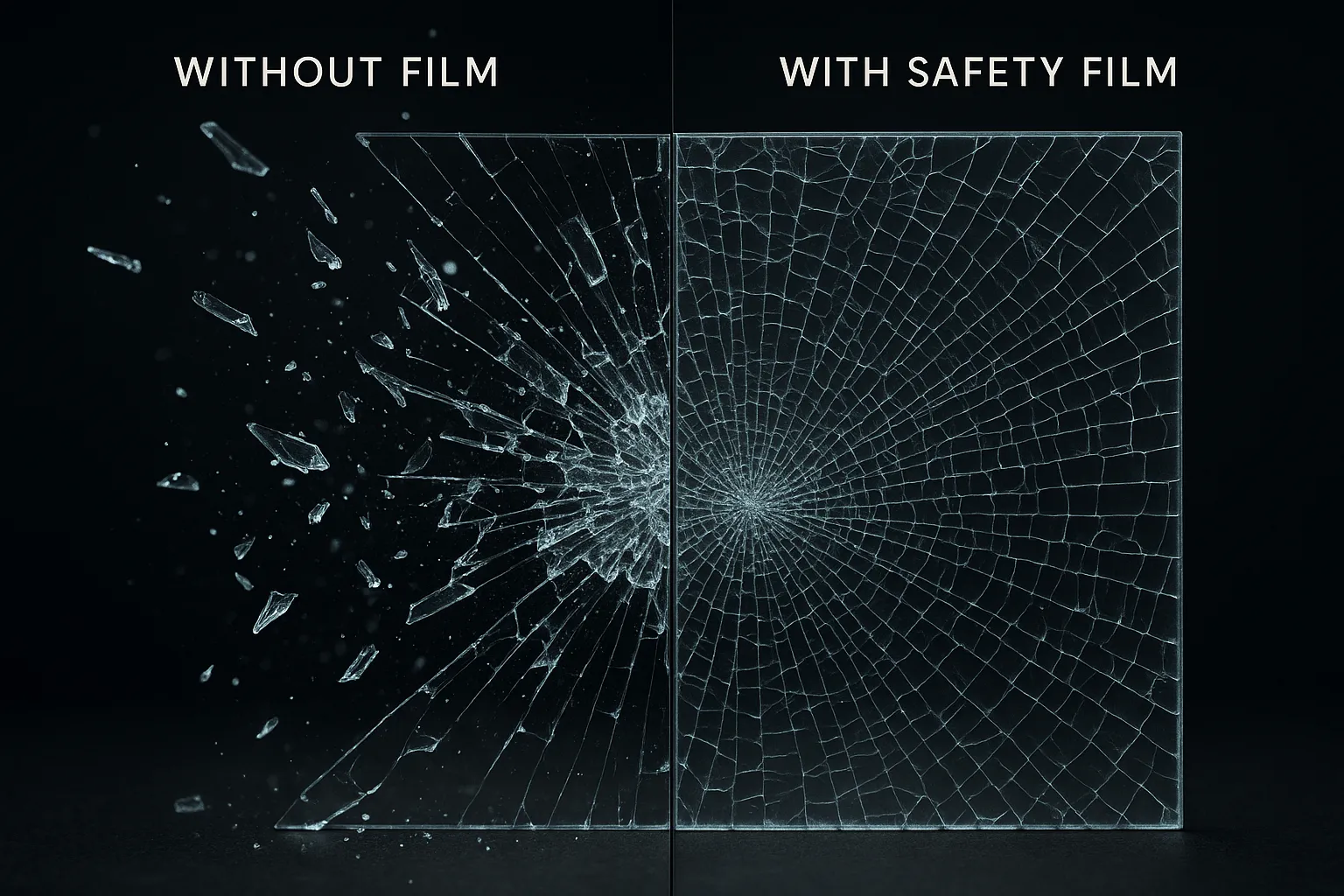
What shatter-resistant film actually does is change how glass fails. Untreated glass that breaks sends fragments across the room. Filmed glass that breaks tends to stay bonded to the film, holding the broken pane roughly in place. The glass still breaks. It simply stops behaving like shrapnel.
That distinction matters commercially as well as technically: if a supplier tells you a film is shatterproof, they are either being loose with language or overselling the product, and it is worth asking which.
Where "security film" differs
Security filmis the one term that signals a real difference in degree. It usually means a thicker, tougher film built to slow a determined intruder or a smash-and-grab attempt, buying seconds against forced entry rather than only managing accidental breakage. It’s still surface-applied film, so it sits on the same spectrum as safety film; it’s a heavier build for a higher threat, not a wholly different product. We walk through the distinction in safety film vs security film.
What these are NOT
- Not laminated glass. Laminated glass has a bonded interlayer built in when the glass is made; film is applied to the glass you already have. Same goal, different route. See safety film vs laminated glass.
- Not solar or tint film. Heat, glare, and privacy are the job of a separate solar/tint film category. A safety film is chosen for glass safety, not to cool a room. See does safety film block heat or UV?
- Not "unbreakable glass."No surface film makes glass unbreakable, blast-proof, or injury-proof. It’s designed to help retain fragments and reduce hazard.
So which do you actually need?
For most Dubai homes and offices worried about accidental breakage (children, large glazing, sliding doors), a standard glass safety (anti-shatter) film is the fit. If your concern is forced entry or smash-and-grab, ask about the heavier high-securitybuild. Either way, the name on the brochure matters far less than matching the film to the risk you’re actually managing, which is the conversation to have at survey.
Key takeaways
- Safety film = safety glazing film = shatter-resistant film = anti-shatter film: different names, same fragment-retention product.
- Security film is the same idea in a thicker build aimed at slowing forced entry.
- None of these is laminated glass (built-in) or solar/tint film (heat & glare).
- No film makes glass unbreakable. It’s designed to help hold fragments together.
Not sure which film fits your glass?
Tell us the risk you’re managing (accidental breakage, forced entry, or both), and we’ll recommend the right film honestly, with a transparent estimate.
Our commitment
We’d rather clear up the jargon than hide behind it. If a supplier makes four different names sound like four different miracle products, be cautious. It’s one honest product category (a film that helps hold broken glass together), and we’ll always tell you plainly which version fits your situation.