Not directly comparable, and for most people that is the wrong question. Laminated glass has a bonded interlayer built in at manufacture, so as a complete glazing unit it is the stronger system. Safety film is applied to glass you already own, and delivers the same core benefit that matters day to day: holding fragments together instead of letting them scatter. The real choice is rarely "which is stronger" but "am I replacing this glass or protecting what is already installed". Neither makes glass unbreakable.
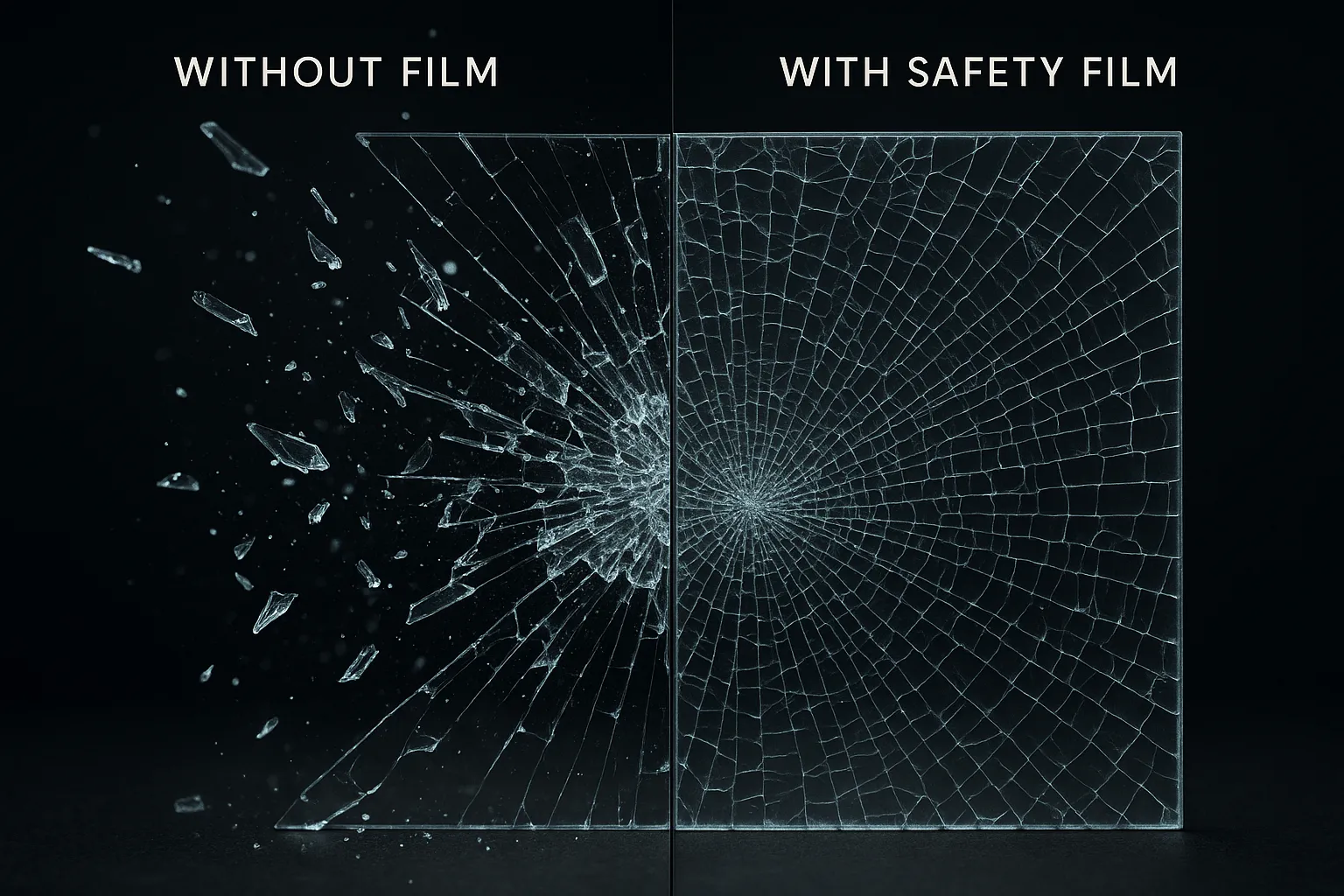
Laminated glass and glass safety film are often discussed as rivals. In practice they solve a similar problem, holding broken glass together, from opposite directions. Laminated glass is engineered with a bonded interlayer when the glass is made. Safety film, also called safety glazing film or shatter-resistant film, is applied to the surface of glass that is already installed. The right choice usually comes down to whether you are building or retrofitting.
Laminated glass
Laminated glass sandwiches a plastic interlayer between two panes, so if it breaks the pieces tend to stay bonded to that layer. It is a strong, manufactured-in solution, and because it is part of the glass unit, choosing it generally means specifying it at design stage or replacing your existing glazing. That makes it a natural fit for new builds and major renovations, with a correspondingly larger cost and disruption when retrofitting.
Glass safety film
Safety film is a retrofit. It is applied to your existing panes, so you upgrade the glass you already have without removing or replacing it. That makes it faster, less disruptive, and typically more cost-effective for an occupied home or working building, which is why it is a common choice for glass safety film in villas with glazing already in place. It is designed to help retain fragments on impact: the same goal, achieved on the glass you already own.
Is safety glazing film as strong as laminated glass?
Taken as a complete glazing unit, laminated glass is the stronger build. Its interlayer is bonded between two panes at manufacture, so the whole assembly is engineered as one piece. Surface-applied film cannot replicate that, and any supplier claiming otherwise is overselling.
But strength on its own is the wrong measure for most buyers, because the two are not usually alternatives. Laminated glass is a decision you make when specifying or replacing glazing. Film is a decision you make about glass that is already in the building. If your windows are installed and you are not replacing them, laminated glass is not on the table at any strength.
On the benefit people actually care about, fragment retention, the gap narrows considerably. Both keep broken glass largely in place rather than scattering it. That is the outcome that reduces injury risk, and film delivers it without replacing a single pane.
How to choose
- Building or fully renovating? Specifying laminated glass at design stage is worth considering.
- Have glass already installed? Safety film upgrades it without replacement, usually the practical choice.
- Mixed situation? Many properties combine both: laminated where it was designed in, film everywhere else.
Working with existing glass?
Film upgrades what you already have, with no re-glazing. Get a transparent estimate in minutes.
The honest summary
Neither makes glass unbreakable. Both reduce the danger of scattered fragments. Laminated glass is the built-in option for new glazing; safety film is the retrofit option for glass that is already in place. For most existing Dubai properties, film delivers the safety benefit without the cost and upheaval of replacing the glass.